The Perfect Storm: Expansive Clay and Coastal Salt Air
Living in Corpus Christi means enjoying beautiful Gulf breezes, warm weather year-round, and a vibrant coastal community. But if you own a home or business here, you've likely noticed something less appealing: concrete that cracks, crumbles, and deteriorates faster than it should. This isn't a sign of poor installation or bad luck. It's the direct result of two powerful environmental forces working against your concrete surfaces: expansive clay soil and salt-laden air.
The Coastal Bend region sits atop some of the most challenging soil conditions in Texas. The clay beneath Corpus Christi is highly expansive, meaning it swells dramatically when wet and shrinks when dry. This constant movement creates stress on anything built on top of it, and concrete is particularly vulnerable. Add to that the corrosive effects of salt air blowing in from the Gulf of Mexico, and you have a recipe for accelerated concrete deterioration that homeowners in inland Texas simply don't face.
Understanding these forces is the first step toward protecting your investment. Whether you're planning new Concrete Driveways or dealing with existing damage, knowing what you're up against helps you make smarter decisions about maintenance, materials, and repairs.
Expansive Clay Concrete Damage in Corpus Christi: How Soil Movement Cracks Your Driveway
Expansive clay is one of the most significant threats to concrete longevity in the Coastal Bend. Unlike stable soil that remains relatively constant, expansive clay can increase in volume by 10 to 15 percent or more when it absorbs moisture. During our wet season or after heavy rain, this soil expands upward, pushing against your concrete slab from below. When dry spells arrive, the clay shrinks, leaving gaps and causing uneven settling. This cycle repeats year after year, and with each cycle, your concrete experiences stress.
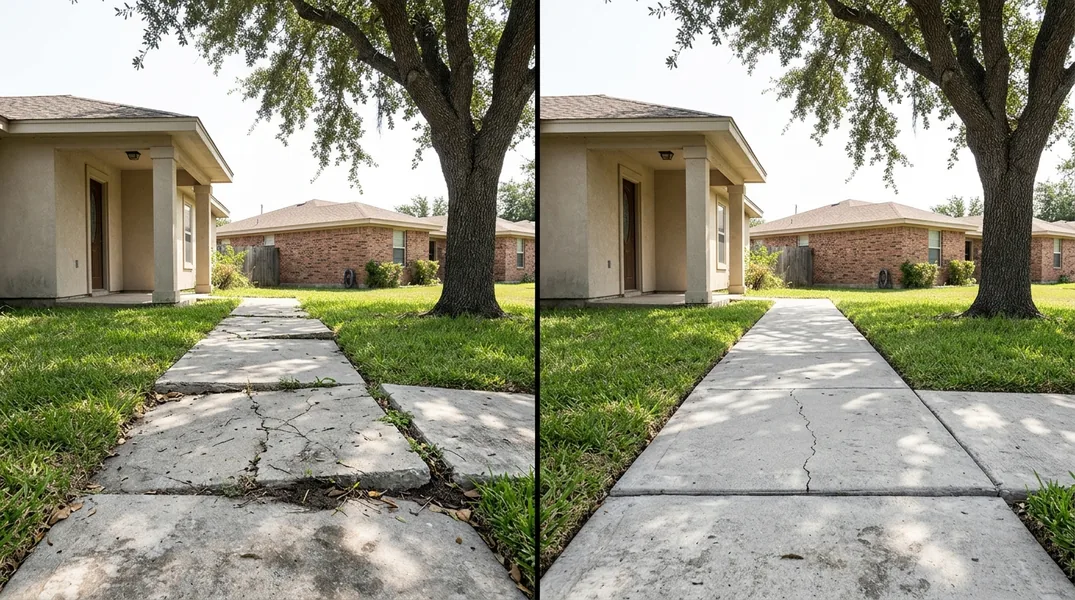
The result is a distinctive pattern of damage that local homeowners recognize all too well: diagonal cracks radiating from a central point, or long fissures running across the surface. Sometimes the concrete develops a wavy or undulating appearance as different sections settle at different rates. In severe cases, sections of the slab may heave upward or sink down, creating trip hazards and drainage problems. What makes this particularly frustrating is that this damage can occur even with high-quality concrete installation. The problem isn't the concrete itself, it's what's happening beneath it.
The key to minimizing expansive clay concrete damage is proper site preparation and material selection. A qualified concrete contractor should evaluate soil conditions, ensure adequate base preparation, and sometimes recommend special concrete mixes or reinforcement strategies. If you're already seeing cracks or movement in your driveway, Concrete Repair & Resurfacing services can address the damage before it worsens. The sooner you address the problem, the more cost-effective your solution will be.
Salt Air and Rebar Corrosion: The Hidden Enemy Inside Your Concrete
While expansive clay attacks concrete from below, salt air wages a different kind of assault from within. Reinforced concrete contains steel rebar that provides tensile strength and helps the concrete resist cracking. In most environments, this rebar is protected by the alkaline environment that concrete creates. But salt air changes everything. The salt particles carried on the Gulf breeze can penetrate concrete surfaces, especially those with micro-cracks or poor sealing. Once salt reaches the rebar, it triggers a corrosion process that weakens the steel and causes it to expand.
As the rebar corrodes, it swells, creating internal pressure that forces the concrete to crack and spall (flake away). This process is often invisible at first. You might notice small surface cracks or a slight discoloration, but by the time the damage becomes obvious, significant deterioration has already occurred. This is why homeowners in coastal areas need to be more proactive about concrete maintenance than their inland neighbors. Regular sealing and inspection aren't luxuries, they're necessities.
The best defense against salt air rebar corrosion is prevention through proper sealing and maintenance. A high-quality concrete sealer creates a barrier that slows salt penetration and extends the life of your concrete significantly. For existing damage, professional Concrete Repair & Resurfacing can remove compromised sections and restore structural integrity. If you've noticed spalling, discoloration, or rust stains on your concrete, it's time to call a professional. Contact Corpus Christi Concrete at (361) 480-0793 to discuss your specific situation.
Coastal Bend Soil Cracking: Why Your Concrete Settles Unevenly
Beyond the simple expansion and contraction of clay, the Coastal Bend's soil composition creates another problem: differential settlement. Not all soil settles at the same rate. Some areas may have pockets of sand, others clay, and still others a mix. When your concrete slab is poured across soil with varying densities and moisture retention, different sections settle at different rates. This creates stress concentrations that lead to cracking and, in extreme cases, a slab that looks like a washboard.
Differential settlement is particularly problematic in areas where drainage is poor or where landscaping changes affect how water moves through the soil. A tree planted near your driveway, for example, can draw moisture from the soil on one side, causing that section to shrink while the other side remains moist. Over time, this creates a noticeable depression or hump. Homeowners often assume this is a defect in the concrete, but it's really a consequence of soil movement beneath it.
The solution involves understanding your site's drainage patterns and soil conditions before concrete is placed. Proper grading, base preparation, and sometimes the use of special reinforcement can minimize differential settlement. If you're planning a new concrete project in the Coastal Bend, these factors should be part of your contractor's site evaluation. For existing slabs showing signs of settlement, professional assessment can determine whether repair, resurfacing, or replacement is the best option. Reach out to Corpus Christi Concrete for a free estimate to evaluate your concrete's condition.
Protecting Your Concrete Investment: Maintenance and Material Strategies
Given the harsh environmental conditions in Corpus Christi, proactive maintenance is your best defense. Sealing your concrete every two to three years creates a protective barrier against salt penetration and reduces water absorption that feeds expansive clay movement. Choose a sealer specifically formulated for coastal environments, as standard sealers may not provide adequate protection. Additionally, maintaining proper drainage around your concrete surfaces prevents water from pooling or penetrating the slab, which exacerbates both clay expansion and rebar corrosion.
When it comes to new concrete installation, material selection matters. Some contractors use concrete mixes specifically designed for coastal or expansive soil conditions. These mixes may include air entrainment, fiber reinforcement, or special binders that improve durability. While these options may increase initial pricing, they often provide better long-term value by reducing maintenance needs and extending the life of your concrete. For decorative concrete like Stamped & Decorative Concrete, protection is even more important since the decorative finish can be compromised by salt and moisture damage.
Regular inspection is equally important. Look for early signs of trouble: hairline cracks, slight discoloration, spalling, or uneven surfaces. Catching problems early allows for targeted repairs that are far less expensive than waiting until major damage occurs. If you notice any concerning changes to your concrete, don't hesitate to reach out to Corpus Christi Concrete at (361) 480-0793 for a professional evaluation.
Concrete Repair in Corpus Christi, Texas: When to Call a Professional
Not all concrete damage requires complete replacement. Many issues can be effectively addressed through targeted repair and resurfacing. Small cracks can be sealed to prevent water and salt penetration. Spalled areas can be patched with specialized repair compounds. Uneven surfaces can sometimes be leveled or resurfaced to restore safety and appearance. The key is getting a professional assessment to determine what approach makes sense for your specific situation.
The longer you wait to address concrete damage, the more expensive the ultimate solution becomes. A small crack that's sealed today might cost fifty dollars. Left unattended for two years, that same crack can develop into a spalling section that requires a thousand-dollar patch or resurfacing job. This is particularly true in Corpus Christi, where environmental factors accelerate deterioration. Professional Concrete Repair & Resurfacing services can assess your concrete's condition, identify the root causes of damage, and recommend the most cost-effective solution.
Corpus Christi Concrete has extensive experience addressing the unique concrete challenges of the Coastal Bend. Whether your driveway is suffering from expansive clay movement, salt air corrosion, or differential settlement, our team can help. Contact us today at (361) 480-0793 or visit our website to request a free estimate. We'll evaluate your concrete, explain what's causing the damage, and provide a clear path forward to protect your investment for years to come.
Looking for a professional concrete contractor in Corpus Christi? Corpus Christi Concrete responds fast for all your concrete needs.
Get a Free QuoteOur services: Concrete Driveways · Concrete Patios · Stamped & Decorative Concrete