Understanding New Construction Concrete Slabs in Corpus Christi
Buying a new home is one of the largest investments you'll ever make, and the foundation quite literally supports everything else. In Corpus Christi, most new construction homes are built on concrete slabs rather than traditional basements or crawl spaces. This is largely due to our local soil conditions, climate, and building practices. However, many homebuyers don't fully understand what they're looking at when they walk across that new concrete slab or what potential issues could arise months or years down the line.
A concrete slab foundation serves as the base for your entire home's structural integrity. Unlike other regions where homes sit on pilings or deep foundations, Corpus Christi builders typically pour concrete slabs directly on the ground after proper site preparation. This method is cost-effective and works well in our climate, but it requires careful attention during construction and thorough inspection before you sign the final paperwork. Understanding the basics of how these slabs are constructed, what can go wrong, and what red flags to watch for will help you make an informed decision about your new home purchase.
What Is a Post-Tension Slab and Why Does It Matter?
One of the most important terms you'll encounter when buying a new home in our area is 'post-tension slab.' A post-tension slab is a type of concrete foundation that uses steel cables or strands running through the concrete. These cables are tensioned (pulled tight) after the concrete has been poured and cured, which places the slab under compression. This compression helps the slab resist cracking and movement, making it stronger and more durable than a standard concrete slab. Many builders in Corpus Christi use post-tension slabs because they perform particularly well in areas with expansive clay soils and variable moisture conditions, both of which are common in our region.
The advantage of a post-tension slab new home foundation is that it can better handle the seasonal expansion and contraction of the soil beneath it. During dry seasons, soil can shrink, and during wet seasons, it can expand. A properly tensioned slab can accommodate these movements without developing the severe cracks that might appear in a standard slab. However, this doesn't mean post-tension slabs are immune to problems. If the cables aren't properly tensioned, if the concrete wasn't mixed or cured correctly, or if the site preparation was inadequate, even a post-tension slab can develop issues. This is why a thorough builder foundation inspection before closing is absolutely critical.
Critical Steps for Your Builder Foundation Inspection
Before you close on your new home, you should hire a qualified structural engineer or foundation specialist to conduct a thorough builder foundation inspection. This isn't something to skip or rush through. The inspector will look for visible cracks, settlement issues, moisture intrusion, proper drainage around the foundation, and evidence that the slab was poured and finished according to code. They'll also verify that the builder followed the engineer's specifications for the slab design, including proper base preparation, reinforcement placement, and curing time.
During the inspection, pay attention to any hairline cracks, wider cracks, or patterns of cracking. Some minor cracking is normal in concrete and doesn't necessarily indicate a serious problem, but certain types of cracks warrant concern. Your inspector will also check that gutters and downspouts direct water away from the foundation, that the grading slopes away from the house, and that there are no signs of water pooling or seepage. Additionally, they should verify that the builder didn't skip important steps like proper soil compaction, installation of a moisture barrier, or adequate ventilation under the slab. If you discover issues before closing, you have leverage to demand repairs or credits. After closing, those repairs become your financial responsibility.
Common Slab Issues and What to Look For
Even with proper construction, concrete slabs can develop problems over time. One of the most common issues is differential settlement, where different parts of the slab settle at different rates. This can happen if the soil beneath the slab wasn't properly compacted or if there are variations in soil type or moisture content. You might notice doors and windows that stick, visible cracks in the slab, or gaps appearing between the slab and the walls. Another frequent problem is heaving, where the slab actually rises due to expansive soil or frost action. In our Corpus Christi climate, frost heave is less common than in northern states, but expansive clay soils can definitely cause the slab to shift upward.
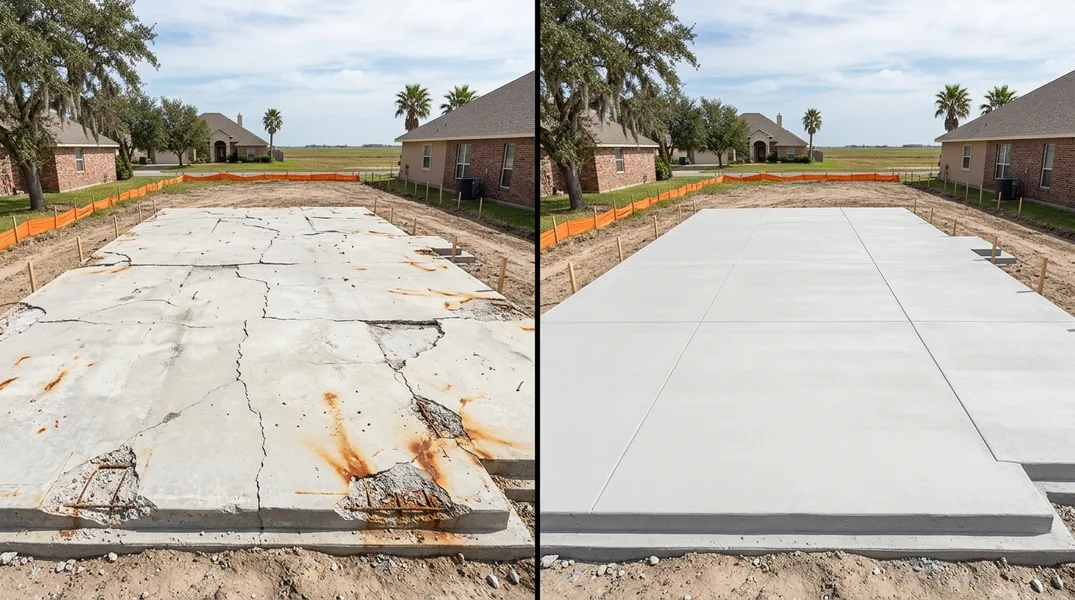
Moisture problems are another concern. If the moisture barrier under the slab wasn't installed correctly or if water is accumulating beneath the foundation, you may notice damp carpets, mold growth, or efflorescence (white mineral deposits) on the concrete surface. Poor drainage around the perimeter of the house can exacerbate these issues. Additionally, if the concrete wasn't properly cured or if low-quality materials were used, the slab might develop surface spalling (flaking or scaling) or show signs of premature deterioration. Some of these issues won't be visible during a pre-closing inspection but may emerge within the first year or two of ownership. This is why it's important to document the slab's condition thoroughly before you close and to have a clear understanding of any builder warranties that cover the foundation.
Questions to Ask Your Builder Before Closing
Armed with knowledge about concrete slab construction, you should be prepared to ask your builder specific, detailed questions about your new home's foundation. Ask for copies of all foundation engineering reports, soil testing results, and the specifications that were used for your specific slab design. Find out whether the slab is a standard concrete slab or a post-tension slab, and if it's post-tension, request documentation showing that the cables were properly tensioned and that testing was performed to verify the tension. Ask about the concrete mix design, the water-cement ratio, and whether any admixtures were added to improve performance. Request details about site preparation, including how much the soil was compacted and whether a moisture barrier was installed.
You should also ask about the builder's warranty on the foundation. Most builders offer a limited warranty that covers structural defects for a certain period, typically one to ten years depending on the defect and the builder. Understand exactly what is and isn't covered, and get the warranty terms in writing. Ask the builder to provide you with maintenance recommendations for the slab, such as how to handle cracks if they appear, what products are safe to use on the surface, and how to maintain proper drainage around the foundation. If the builder is evasive or unwilling to provide this information, that's a red flag. A reputable builder should be confident in their work and happy to provide detailed documentation.
When to Call a Professional for Concrete Repair and Resurfacing Near Me
After you've closed on your home and settled in, you may eventually discover that your concrete slab needs attention. Minor cracks can be sealed with concrete caulk to prevent water intrusion, but larger cracks or structural issues should be evaluated by a professional. If you notice signs of settlement, heaving, or significant cracking, it's wise to have a structural engineer assess the situation before attempting any repairs. Some problems are cosmetic and can be addressed with Concrete Repair & Resurfacing, while others may indicate more serious foundation issues that require professional intervention.
If you're looking for experienced concrete professionals in your area, Corpus Christi Concrete has been serving homeowners throughout Corpus Christi with quality concrete services. Whether you need help evaluating a crack, repairing surface damage, or understanding the long-term maintenance needs of your slab, the team can provide expert guidance. You can reach them at (361) 480-0793 to discuss your specific situation or to get a free estimate for any work your foundation may need.
Looking for a professional concrete contractor in Corpus Christi? Corpus Christi Concrete responds fast for all your concrete needs.
Get a Free QuoteOur services: Concrete Driveways · Concrete Patios · Stamped & Decorative Concrete